Meeting area
Pick one central room where everyone returns when a meeting is called. A living room, kitchen, or other easy gathering point is ideal.
Turn your rooms into the map. Sus Party gives each player a private role and task list, then brings the group back together for accusations and votes. Prepare a task pack, share the room code, and use this guide for your first round.
New players understand the game much faster when the host points out the space first: where meetings happen, where tasks happen, and whether meltdown mode is on.
Pick one central room where everyone returns when a meeting is called. A living room, kitchen, or other easy gathering point is ideal.
Generate a task pack for your areas or write your own list. Review the materials first. Players slide to complete each task after they do it.
If you want meltdown mode, put a laptop in a different room from the meeting area. People should have to travel to reach it.
Prepare a task pack for your rooms, select “Use these tasks in a new game,” then create the room and select “Import generated tasks” in host setup.
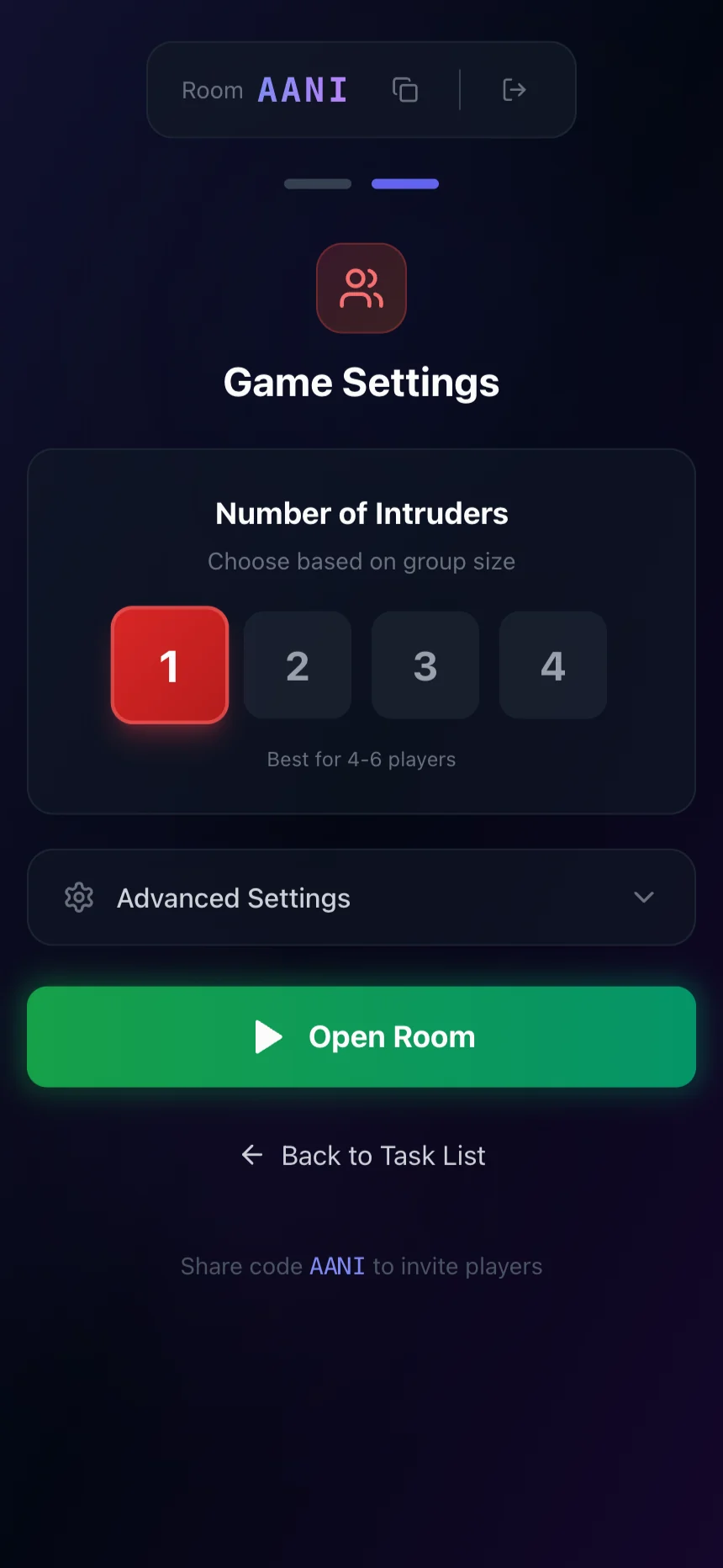
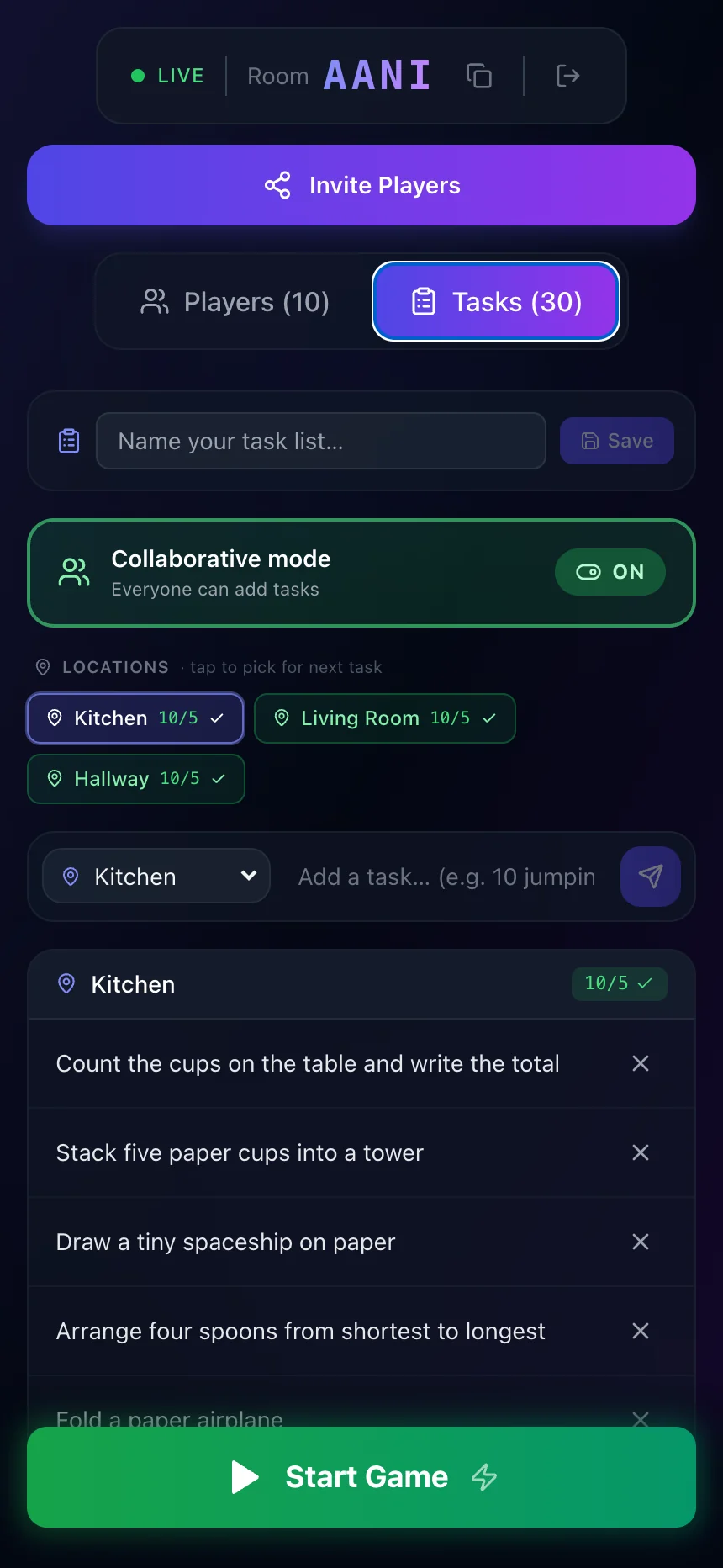
Example games with fictional players. Select a screen to view it full size.
Your phone tells you whether you are a Crewmate or an Intruder. Keep that role private.
Crewmates spend the game finishing tasks, staying alive, and building enough suspicion to vote intruders out.
Intruders look like normal players, but their goal is to quietly remove crewmates and stay alive through the meetings.
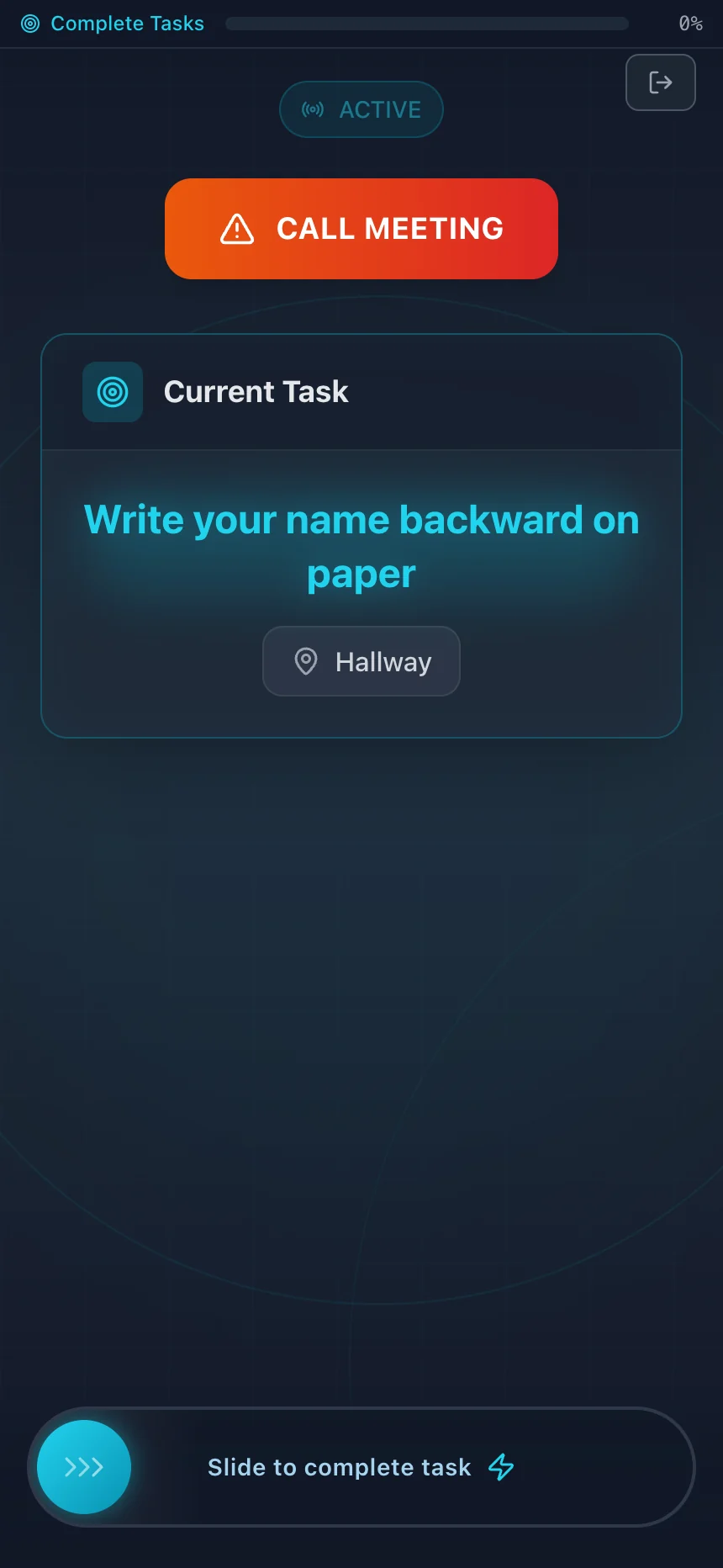
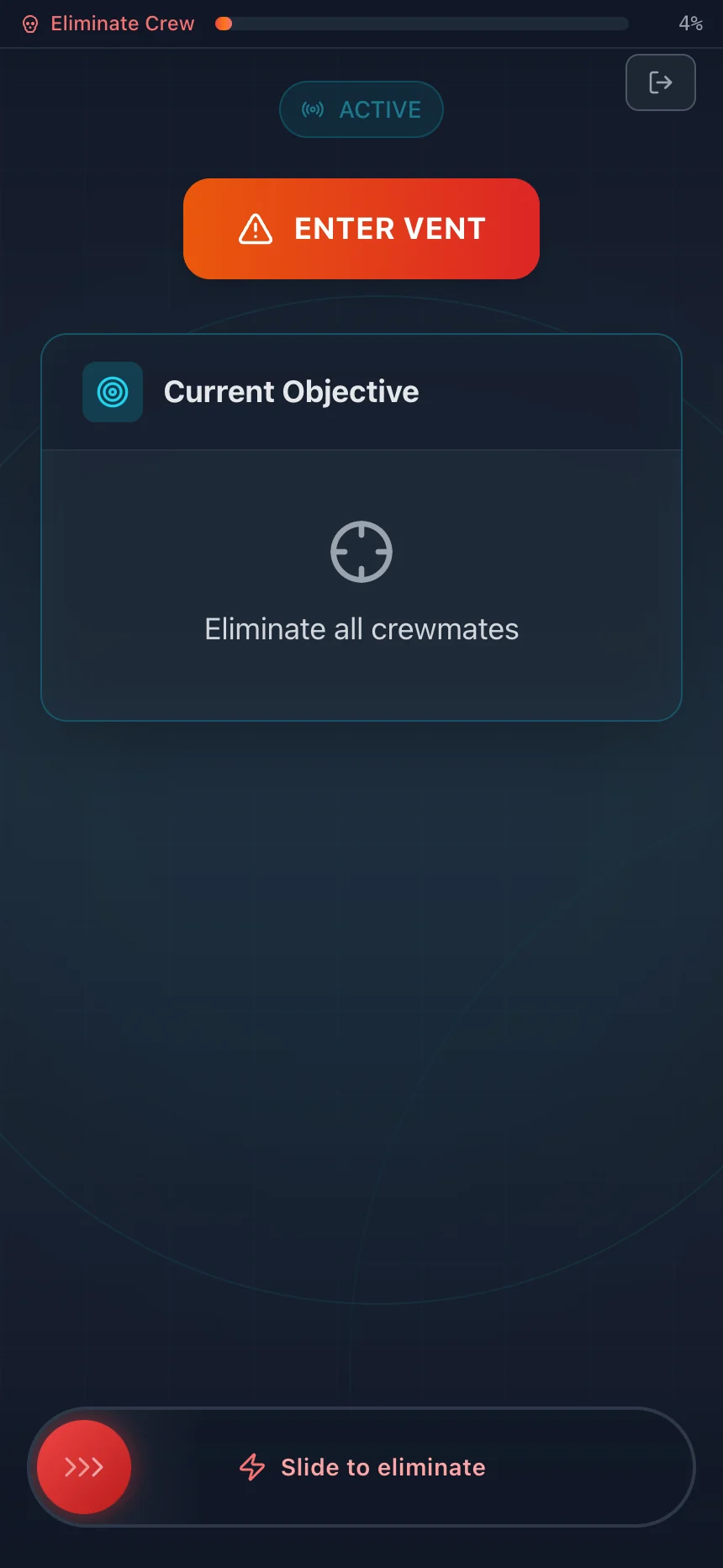
Example games with fictional players. Select a screen to view it full size.
Most of the game is just alternating between moving around the house and gathering in one room to talk about what happened.
Crewmates see one task at a time on their phones. Go to the location, do it in real life, then swipe to confirm it. Intruders should copy that rhythm and look busy.
If an intruder catches someone alone, they can tap that player and quietly tell them they are dead. Anyone who finds the body can call a meeting.
When a meeting is called, everyone heads back to the central room. Do not start debating early. Wait until the phones say the meeting is live.
Living players vote for one person or choose veto or skip. If nobody is ejected, everyone goes back out and the loop starts again.
The game feels best when people stay disciplined about the quiet periods and the meeting area.
If you are killed, stay quiet and leave your body where it was. You cannot mark yourself dead yet. The next time a meeting is called, your phone will show an "I'm Dead" button — you MUST press it during that meeting. The game uses that button to track who is alive, and forgetting it breaks voting, win conditions, and the end-game summary.
The tension lives here. A good meeting is clear, timed, and honest about who is alive, dead, and ready to vote.
If you are unsure, a veto is usually better than ejecting a crewmate by mistake.
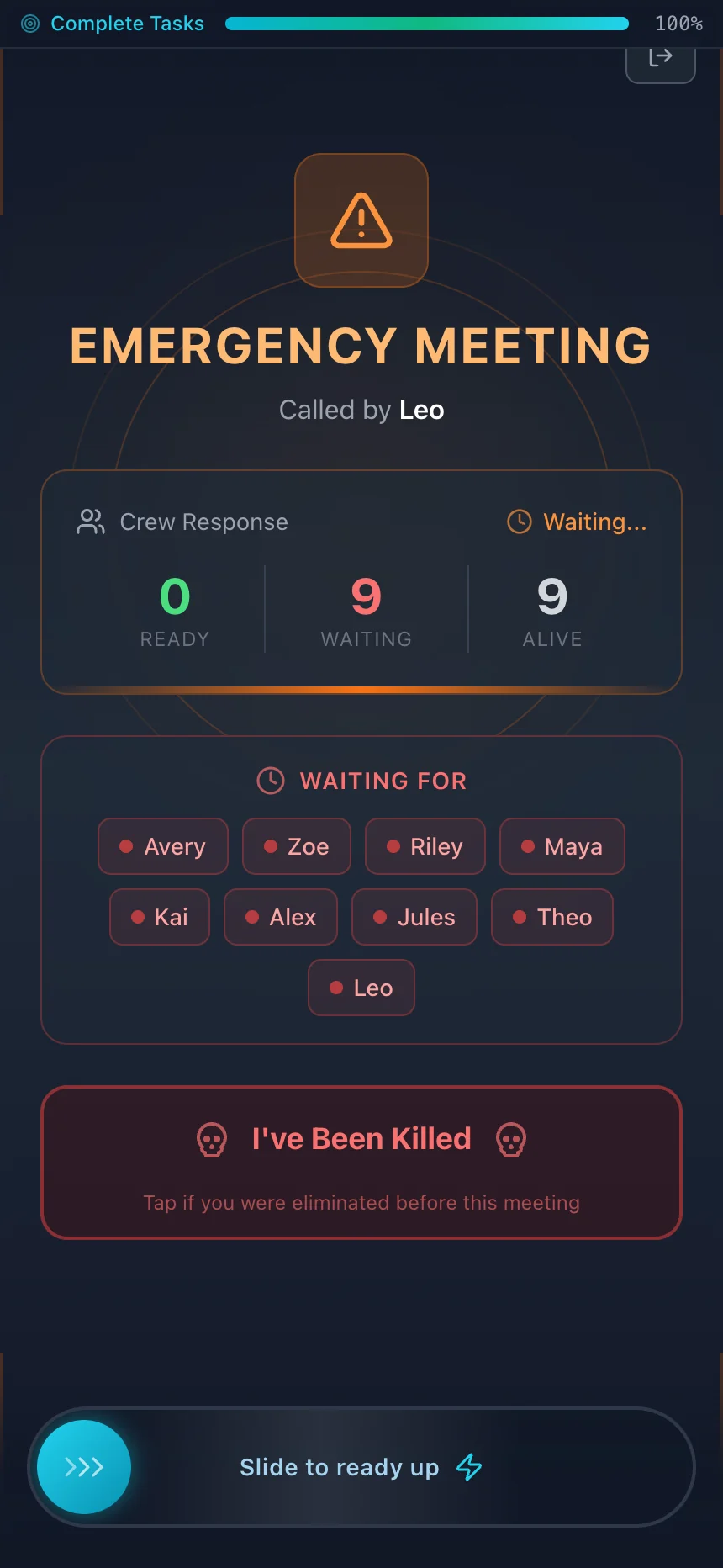
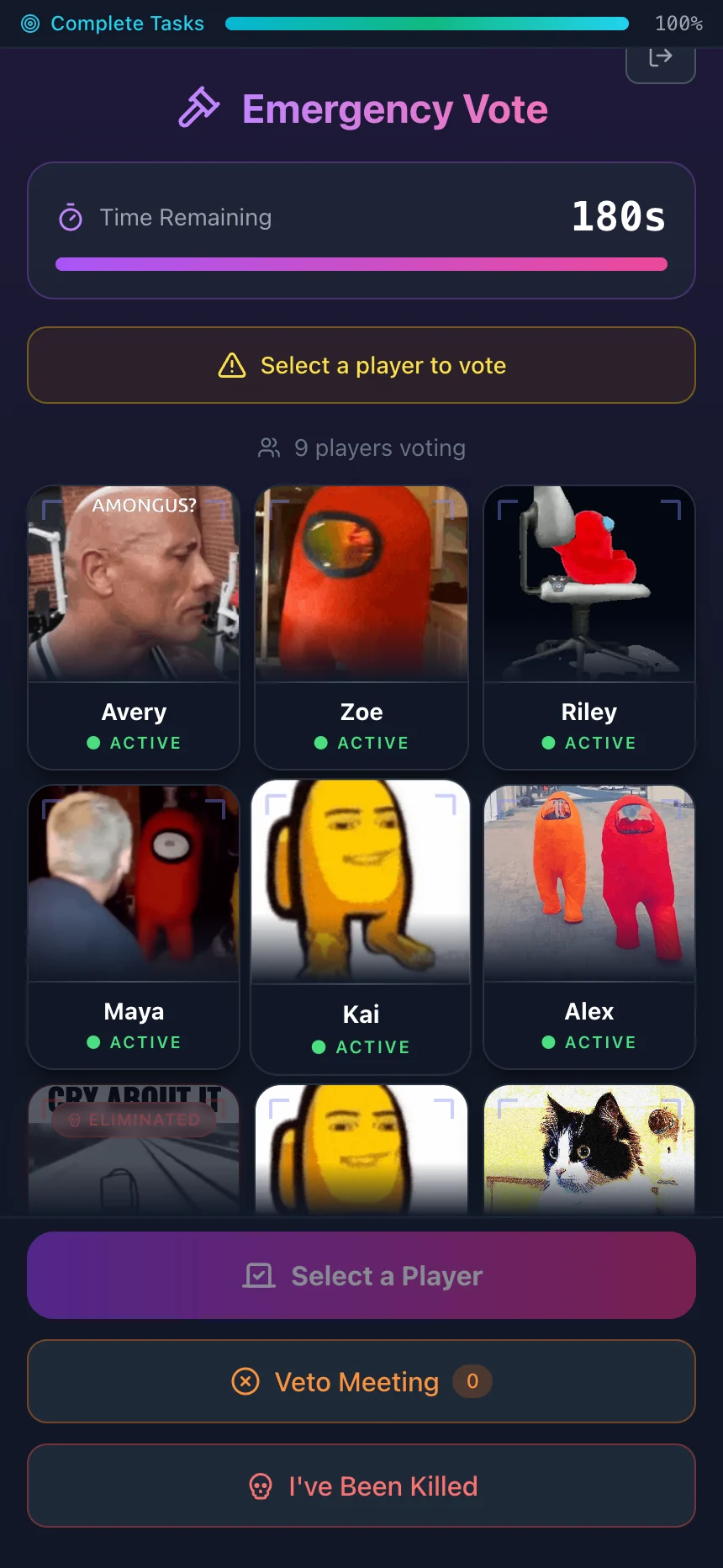
Example games with fictional players. Select a screen to view it full size.
Meltdown gives the crew a time pressure event and gives intruders a way to force movement, panic, and bad decisions.
An intruder can trigger meltdown by physically triggering it at the reactor or with a sabotage card. When that happens, players receive a 4-digit code on their phones and have to move fast.
Put the laptop in a different room from the meeting area. If the reactor is right beside the meeting area, the mechanic loses most of its tension.
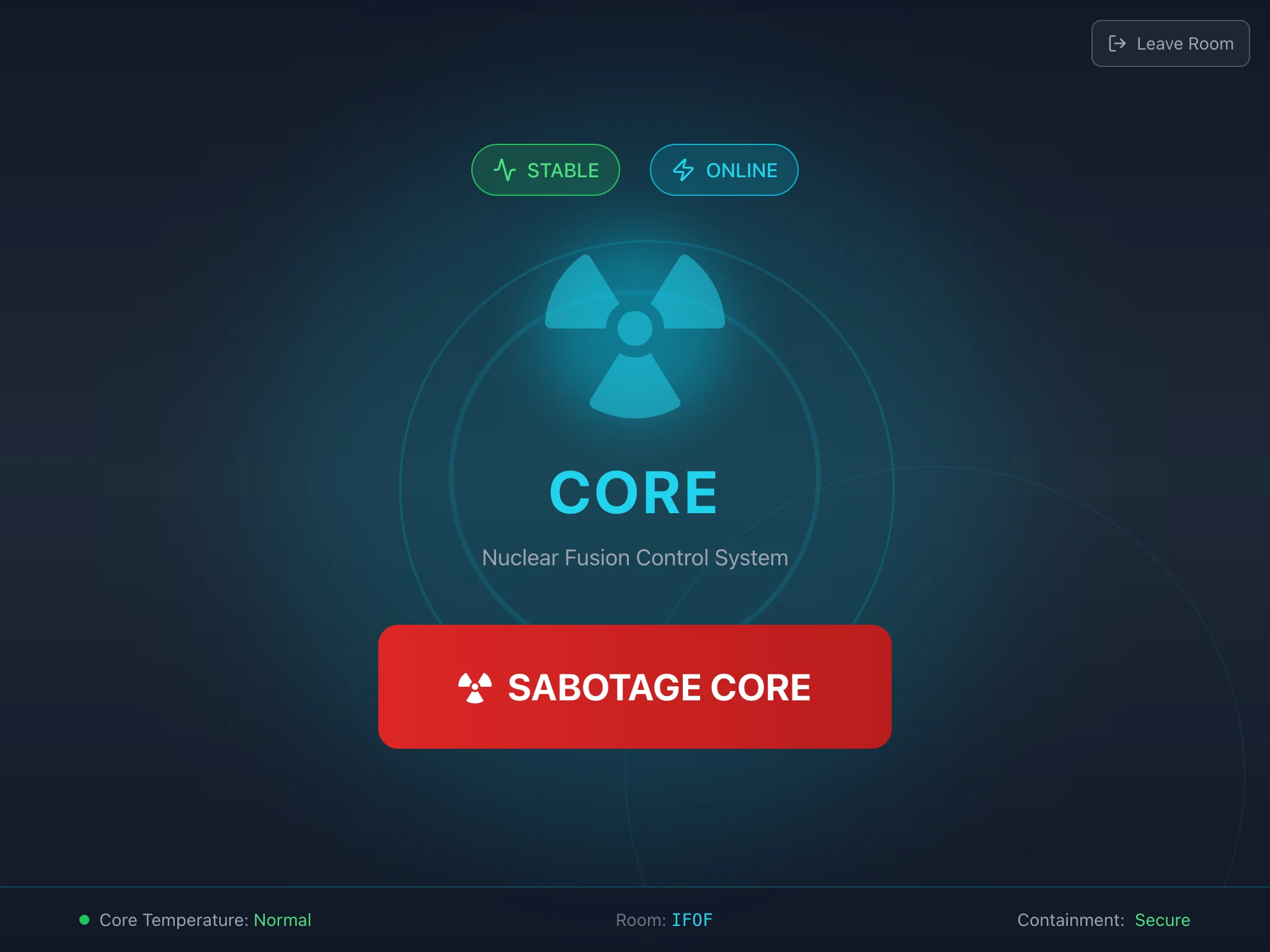
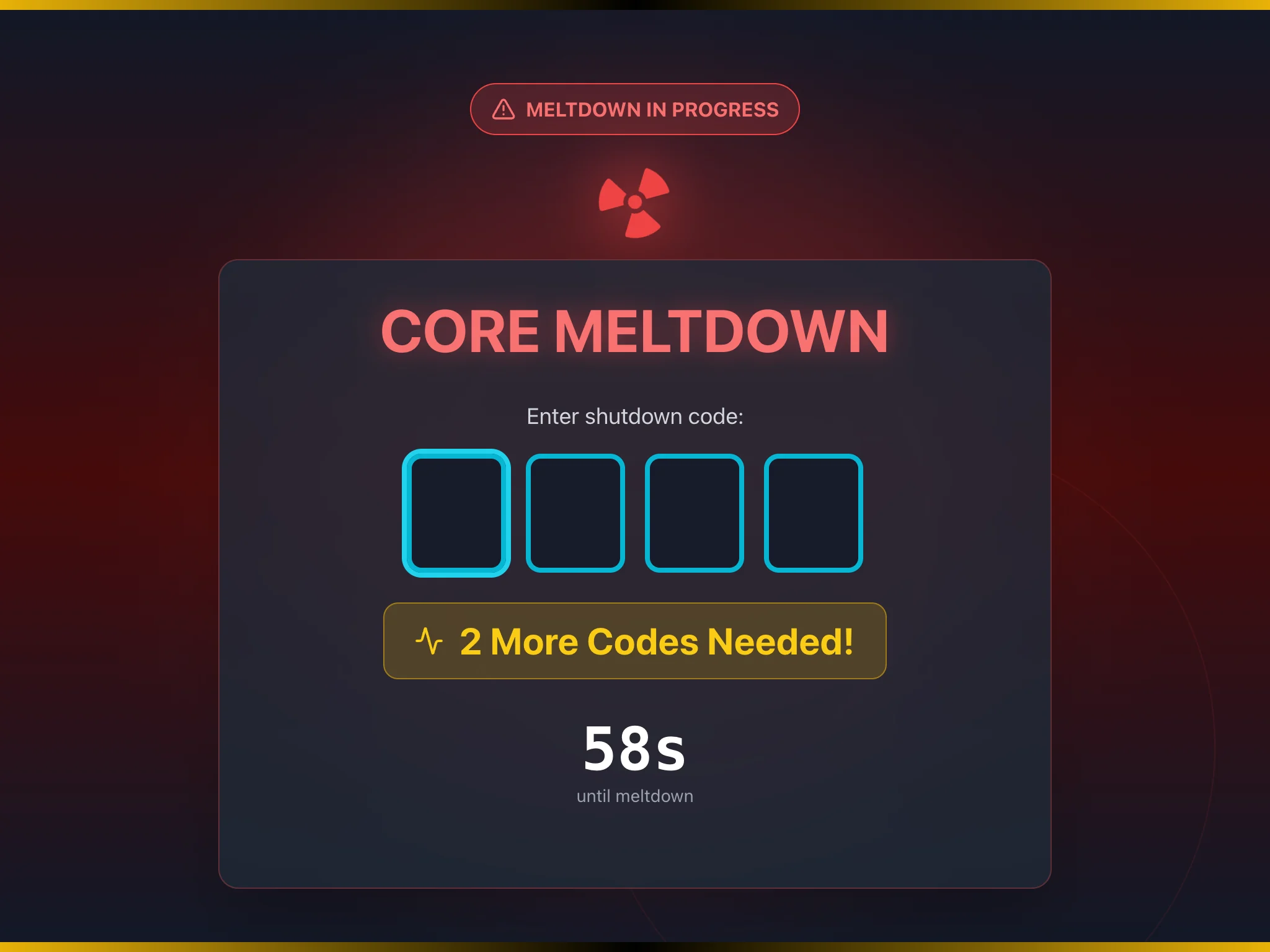
Example games with fictional players. Select a screen to view it full size.
Just understand the kinds of pressure intruders can create. The exact deck can vary based on your settings and whether reactor or speakers are enabled.
Intruders can send a crewmate on a fake errand. Fake tasks waste time and do not add to the crew's score.
Cards like Self Report let intruders create a meeting on their own and redirect suspicion after a kill.
EMP and area denial cards can interfere with devices or temporarily make a location unusable.
Some cards start meltdowns or shorten the time crews have to solve them, which makes late-game chaos much worse.
Intruders start with cards and can draw more after meetings, so surviving intruders become more dangerous over time.
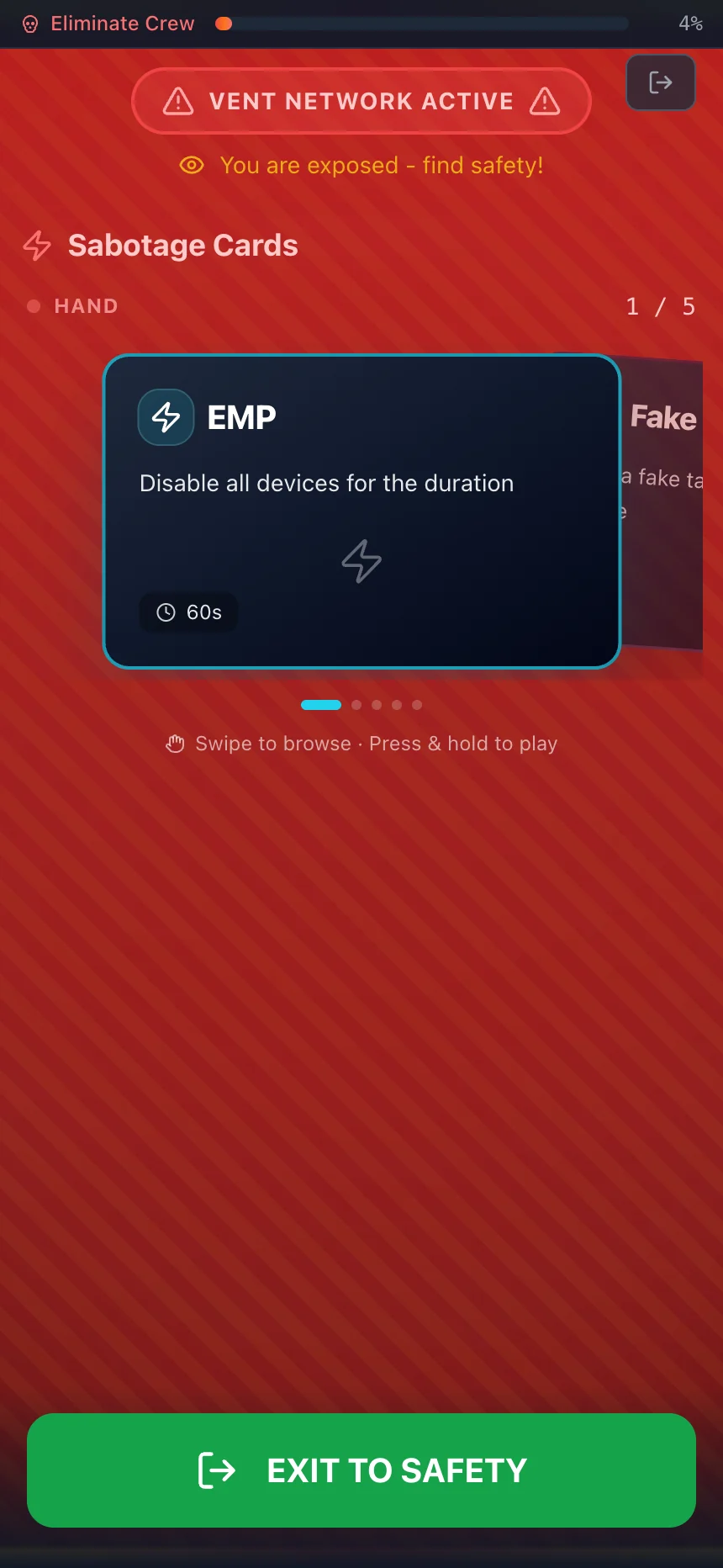
Example games with fictional players. Select a screen to view it full size.
Tasks matter, but they do not finish the match by themselves. Voting is still what ends the game.
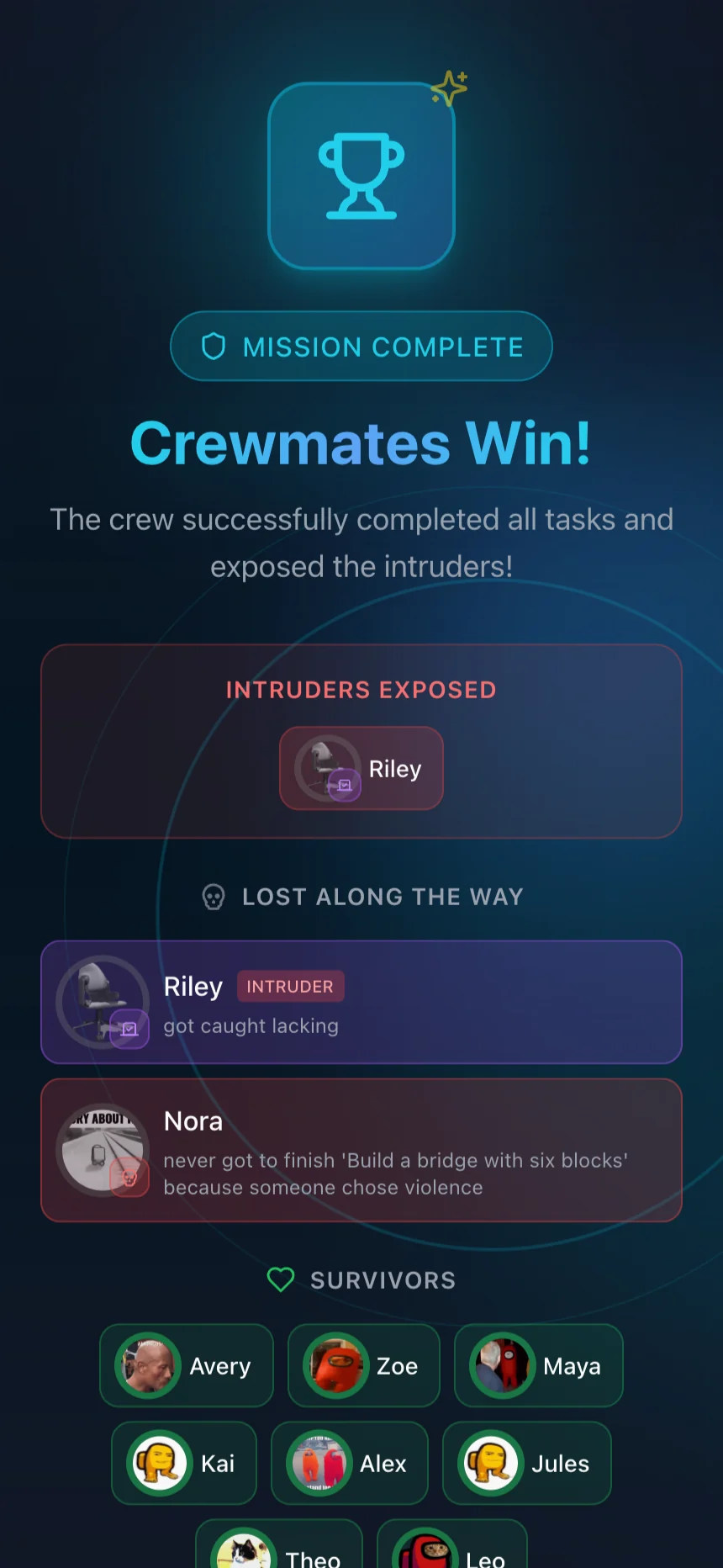
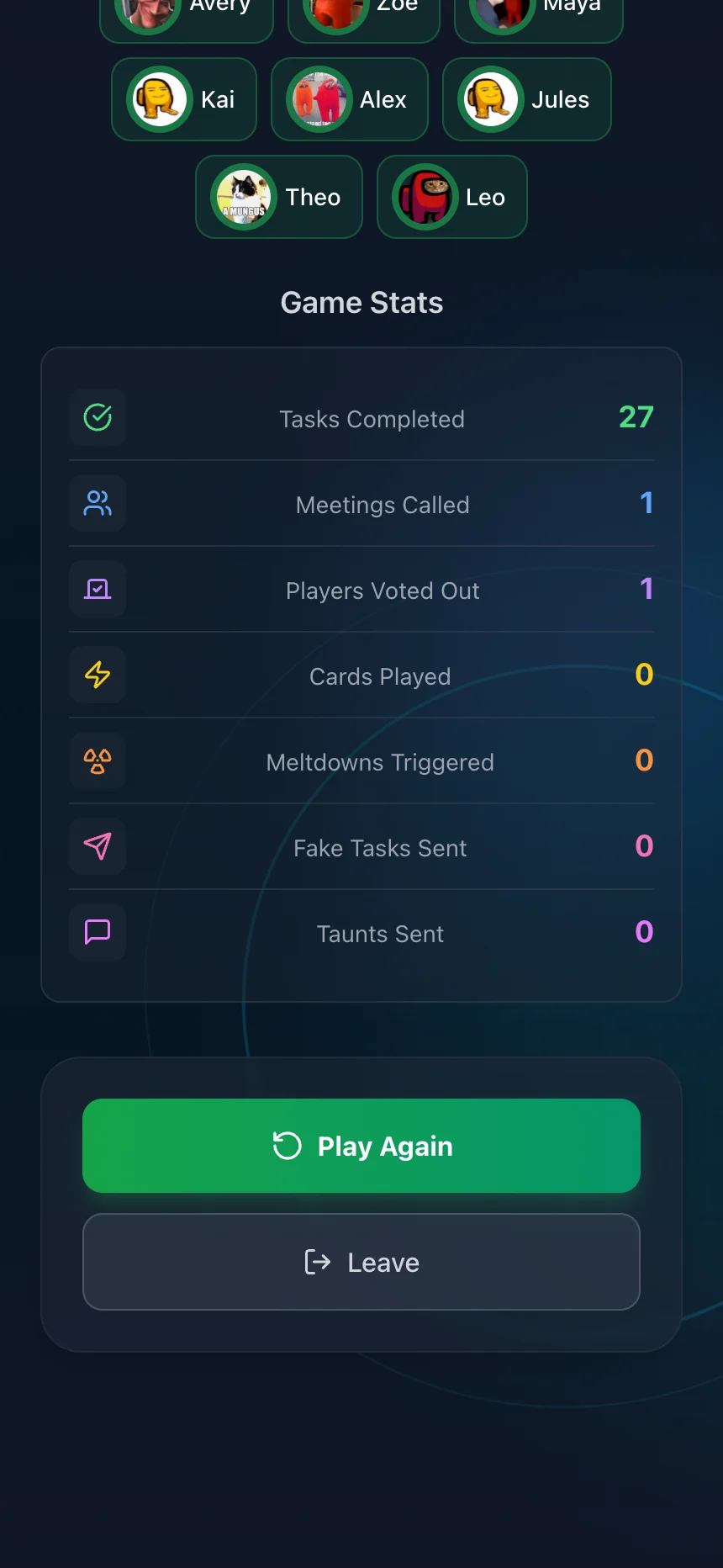
Example games with fictional players. Select a screen to view it full size.
If you only say a few things out loud, say these.