Give relatives something to do, then something to explain
The crew follows tasks into different areas. Intruders use those same areas as cover to eliminate players. A discovered body brings the living players together for a meeting and a vote. Sus Party assigns the roles and counts the votes, so the reunion organizer can be a suspect too.
Choose tasks that everyone in your round can understand: count the chairs, find a visible clock, or draw a triangle inside a circle. The task itself is simple. Explaining why you were beside an eliminated cousin is the interesting part. This setup suits teens and adults who can use their own phones and follow the secret-role rules.
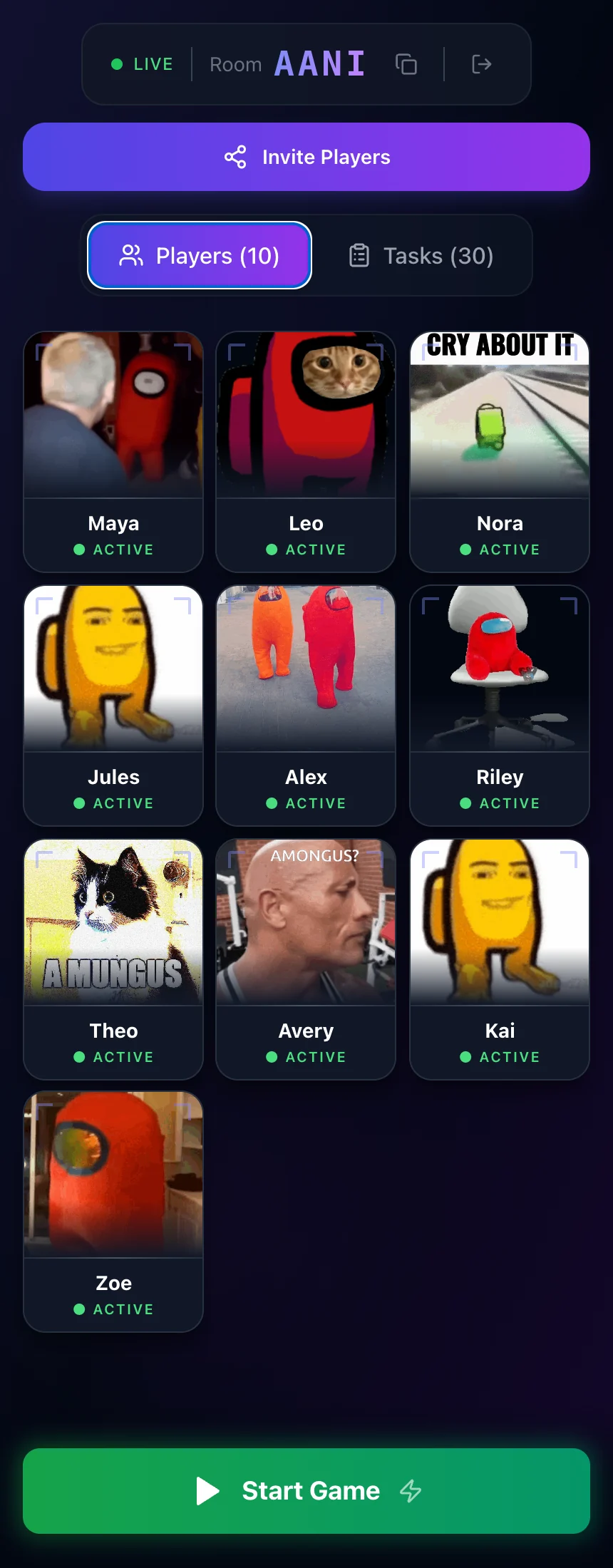
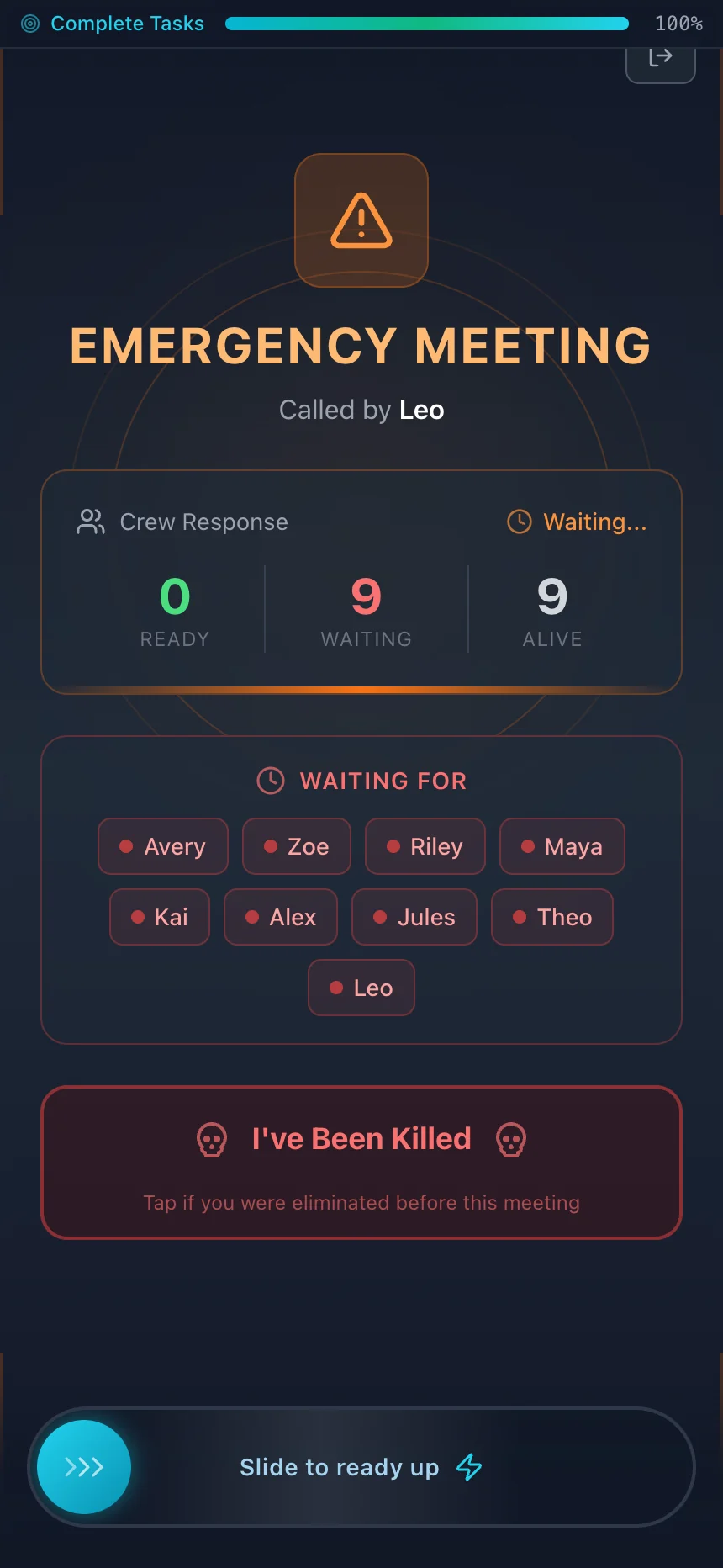
Example games with fictional players. Select a screen to view it full size.
Fit the game to the family home
Gather a group for one round of the ten-player house setup. The generator covers three to fifteen players; adjust the head count to match your group. It starts with the living room, kitchen, and hallway. Review the tasks and set out their materials. If your group wants less movement, use two nearby task stations with observation and paper tasks. Keep a comfortable shared spot for meetings.
Select “Use these tasks in a new game,” create your room, then select “Import generated tasks” in host setup. Open the room and share the four-letter code. Each player needs a phone browser and internet. Teach the player actions together and explain that eliminated players keep the intruder’s identity secret.
Give relatives who sit out a place to watch the accusations. After a round, return to the lobby, change any confusing tasks, and play again. The next intruder can have a completely different approach to the same family.
Put the family storyteller’s alibi to the test.
Prepare a few shared areas and invite your relatives into a Sus Party room.
Free browser game · No account or install · Everyone plays in the same place