What do you want the group to do?
| Game | What you need | What the group does |
|---|---|---|
| Sus Party | Phone browsers, internet, areas for tasks, and the task materials. | Complete tasks around the house, spot suspicious behavior, meet, and vote. |
| Charades | A timer and agreed prompts. | Two teams of five guess what a teammate acts out. |
| Three-round paper clues | A bowl, paper slips, pens, and a timer. | Guess the same prompts through descriptions, one-word clues, and mime. |
| Mafia / Werewolf | Secret role slips and one narrator. | Nine players discuss and vote while the tenth guides the night and day phases. |
Sus Party is our game. The other three are suggested house-rule formats that you can run without a purchase.
Sus Party: use the house as the game board
Choose this when the group wants to move between areas and argue about what actually happened there. Each phone shows a private role and task list. Intruders blend in, eliminate crew members, and use sabotage cards. Meetings bring everyone back together to discuss and vote.
For ten players, start with the ten-player house task pack. It suggests two intruders. Review the rooms and tasks, import the pack into a new room, then share the code. The app needs everyone in the same place with internet. For seated play, use two task stations in one room.
Read the Sus Party round rules before you start. Task completion reveals intruders; the crew still needs to vote them out.
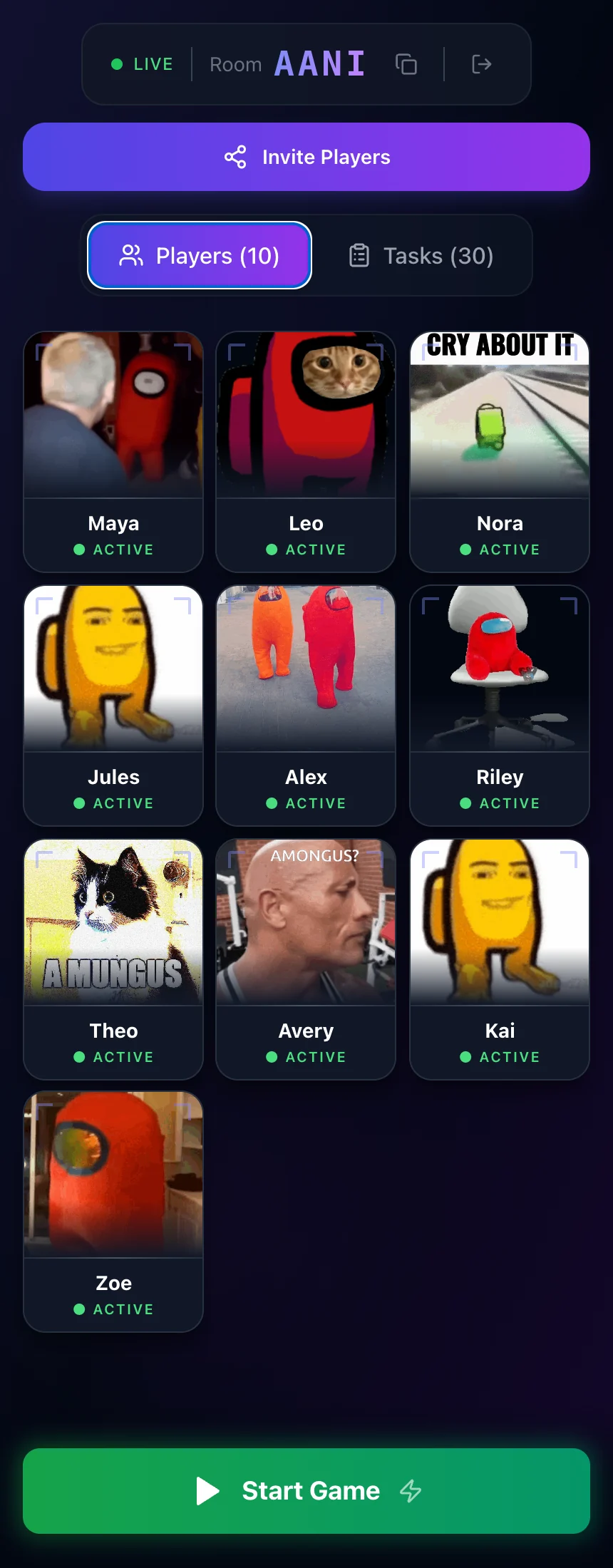
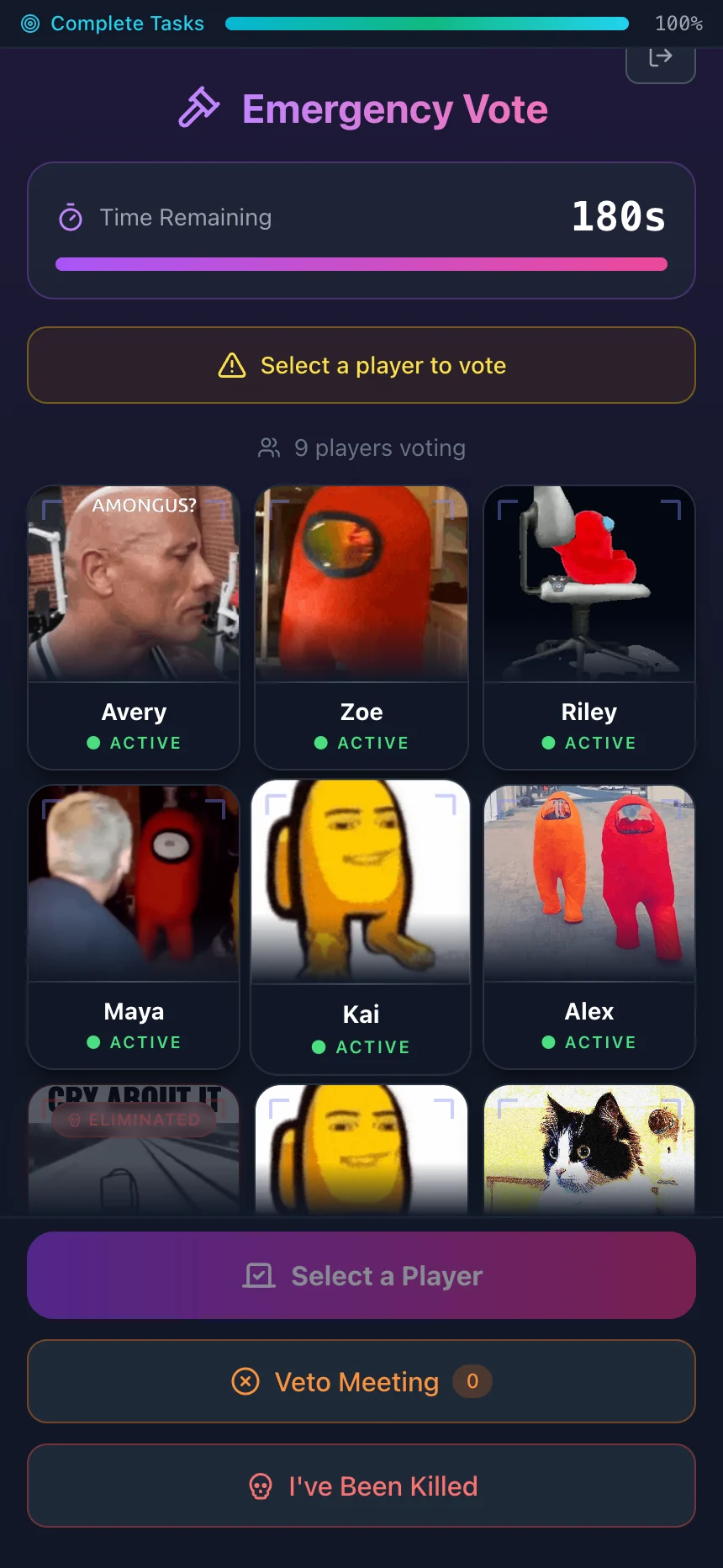
Example games with fictional players. Select a screen to view it full size.
Charades: start before anyone opens a phone
Split into two teams of five. Agree on familiar films, objects, or actions as prompts. One player acts without words while their team guesses. Use a one-minute timer, award one point for a correct guess, and alternate teams. Give everyone a turn before you choose a winner.
Use this as the first activity while guests arrive. Nobody needs to learn a role system or wait for a room code.
Three-round paper clues: let the running jokes build
For this house version, each person writes three familiar names, objects, or phrases on slips. Put them in a bowl and form two teams. In each one-minute turn, a clue-giver tries to get their team to guess as many slips as possible. Each correct guess earns a point.
- First round: describe the prompt without saying its words.
- Return all slips to the bowl. Second round: give only one word for each prompt.
- Return the slips again. Third round: mime the prompt without speech.
Keep the same prompts across all three rounds. The memory of earlier clues becomes part of the game.
Mafia / Werewolf: keep the whole game at the table
Choose a narrator and give the other nine players secret team roles. During the night, everyone closes their eyes; the narrator wakes the hidden team to choose an elimination. During the day, the group discusses and votes on a suspect. Agree on the role mix and each team’s win condition before the first night.
This format fits a group that wants accusations without devices or task stations. Its trade-off is the narrator’s separate job and the time eliminated players spend outside the round. For alternatives, compare the in-person social deduction games.
Make Sus Party the main event
Pick a short warm-up, then use the house task pack for the full-group game. Change the areas, review the list, and take it into a new Sus Party room.
Free browser game · No account or install · Everyone plays in the same place
What if the guest count changes?
For Sus Party, change the player slider before you save the task pack. The generator covers five to fifteen players. With an odd guest count in the team games, rotate one player’s timer or scorekeeper role between turns. Decide the format once the guest list is clear, rather than split a group that wants to play together.